

Cupping
Ancient Technique. Modern Results.
Cupping therapy has been used for centuries to promote healing and relieve pain — and today, it’s a well-established tool in the physical therapist’s toolkit. At Healing Star PT, our therapists use cupping as part of a comprehensive treatment approach to address muscle tightness, soft tissue restrictions, and chronic pain. Unlike traditional massage, which compresses tissue downward, cupping works in the opposite direction — decompressing layers of muscle and fascia to release adhesions, improve circulation, and restore normal tissue mobility.
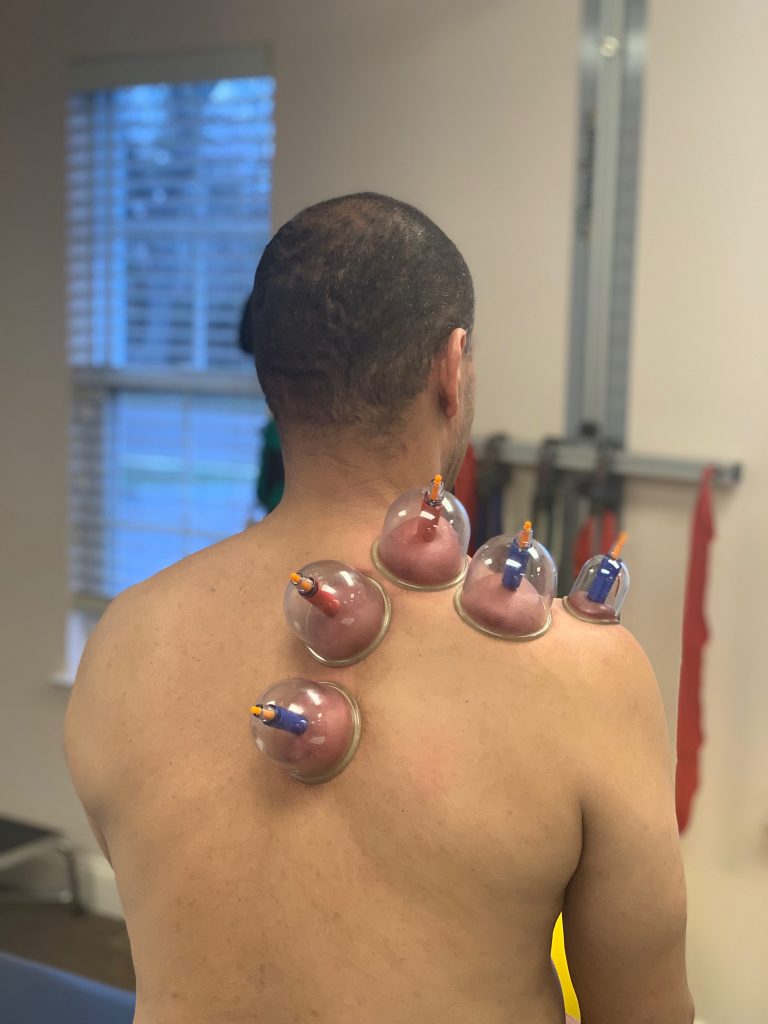
How It Works — Tissue Decompression
Pain and dysfunction often develop when layers of muscle, fascia, and connective tissue become bound together — a result of injury, overuse, or chronic inflammation. These adhesions restrict movement, trap metabolic waste, and create the chronic tightness that resists conventional stretching or massage. Cupping separates these layers through negative pressure, allowing them to glide freely again. This mechanism produces several therapeutic effects:
- Fascial release and reduced adhesions — the suction lifts and separates bound tissue layers, breaking up chronic restrictions that accumulate after injury or overuse
- Increased blood flow — negative pressure draws fresh blood into the area, delivering oxygen and nutrients while flushing out metabolic waste and inflammatory byproducts
- Lymphatic stimulation — the lymphatic system is activated, helping to reduce excess fluid, decrease swelling, and support immune-mediated tissue repair
- Neuromuscular relaxation — sustained decompression resets muscle tone and reduces the pain-spasm-pain cycle that perpetuates chronic tightness
- Trigger point treatment — stationary cupping over trigger points can provide prolonged pressure release similar to sustained manual therapy
Stationary vs. Sliding Cupping
At Healing Star PT, your therapist may use either stationary or sliding cupping depending on the area and goal of treatment:
- Stationary cupping — cups are placed and held in position over a specific trigger point or restriction for 5–10 minutes. Best for isolated areas of chronic tightness or myofascial adhesion.
- Sliding cupping — after applying a thin layer of lotion or oil, the cups are glided across the skin over large muscle groups. Highly effective for broad areas of tightness such as the thoracic spine, IT band, or quadriceps.
Conditions Cupping Can Help With
- Muscle tightness and chronic tension — neck, upper back, thoracic spine
- Myofascial pain syndrome and trigger points
- Limited range of motion from soft tissue restrictions
- Sports recovery and overuse injuries
- Post-injury tissue restrictions and scar tissue
- Low back pain and hip tightness
- Plantar fasciitis (cupping to the calf and foot musculature)
- Shoulder tightness and rotator cuff recovery
- IT band syndrome and knee pain
- Tension headaches with cervical and upper trapezius involvement
What to Expect — Including the Marks
Cupping is typically performed alongside manual therapy and therapeutic exercise as part of your individualized treatment session. You may notice circular marks on your skin afterward — these are commonly called ‘cupping marks’ and are not bruises. They reflect increased blood flow to the surface tissue and indicate areas of greater fascial restriction. The marks are painless, fade within 3–7 days, and are considered a normal and expected part of the treatment process.
Most patients find cupping comfortable and even relaxing. Sensations during treatment range from a gentle tugging to a deep pressure, depending on the suction level used. Your therapist will always adjust the pressure to your comfort level.
Who Is a Good Candidate for Cupping?
Cupping is appropriate for most patients dealing with musculoskeletal pain and soft tissue restrictions. It is generally not used directly over broken skin, open wounds, active inflammation with significant swelling, varicose veins, or areas with fragile skin. Patients on blood thinners should notify their therapist before cupping. Your therapist will review your health history to confirm it is safe and appropriate for you.
Do I Need a Referral?
New Jersey is a direct-access state — no referral needed to begin PT, including cupping therapy.
Eatontown, NJ: 145 Wyckoff Rd, Suite 102 — (848) 208-2721
Freehold, NJ: 501 Iron Bridge Road, Suite 2 — (732) 272-1438
Ready to experience the Healing Star difference?
Book an appointment and take the first step toward feeling better.