

Instrument-Assisted Soft Tissue Mobilization (IASTM)
Precision Treatment for Soft Tissue Dysfunction
When injury occurs, the body lays down scar tissue and collagen as part of the healing process. While this is a natural response, disorganized scar tissue and fascial adhesions can restrict normal movement, cause pain, and prevent full recovery — sometimes for months or years after the original injury.
IASTM (Instrument-Assisted Soft Tissue Mobilization) is a specialized technique that uses precision-designed stainless steel instruments to detect and treat these restrictions. By amplifying the therapist’s ability to feel changes in tissue texture and quality, IASTM enables more targeted, effective treatment than hands-alone techniques in many cases.
How It Works
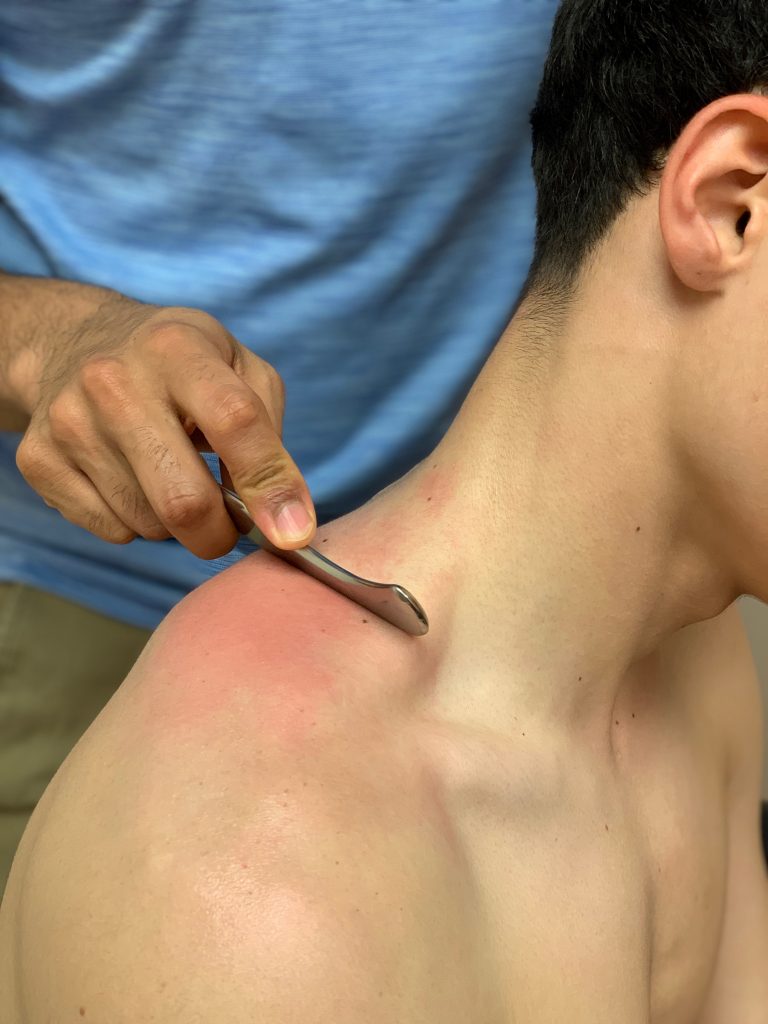
Your therapist uses the instrument to scan and glide across the skin over the affected area, using varying amounts of pressure and direction to identify and treat restrictions in the underlying soft tissue and fascia. The instrument essentially extends the therapist’s tactile sensitivity — allowing them to feel adhesions, scar tissue, and areas of abnormal tissue density with greater precision.
The treatment stimulates a mild inflammatory response in the treated tissue, which triggers the body’s healing cascade — breaking down dysfunctional scar tissue and initiating the remodeling of healthy, organized collagen in its place. The result: improved tissue mobility, reduced pain, and restored function.
Conditions IASTM Treats Effectively
- Achilles tendinopathy
- Plantar fasciitis
- Tennis elbow (lateral epicondylitis) and golfer’s elbow
- Iliotibial band (IT band) syndrome
- Rotator cuff dysfunction
- Post-surgical scar tissue
- Neck and back pain
- Shin splints and lower leg tightness
- Carpal tunnel and wrist restrictions
What to Expect
IASTM is typically applied as part of your broader treatment session, combined with manual therapy and therapeutic exercise for best results. The treatment area is lubricated with cream or gel, and the instrument is applied with controlled strokes across the skin. You may experience some redness (petechiae) in the treated area afterward — this is normal and expected, and typically resolves within a day or two.
Most patients tolerate IASTM well and notice improvements in mobility and pain reduction following treatment.
Do I Need a Referral?
New Jersey is a direct-access state — you can begin physical therapy without a physician’s referral. If you’ve had imaging (MRI, X-ray) or are working with a sports medicine physician or orthopedic surgeon, we are happy to coordinate your care.
Eatontown, NJ: 145 Wyckoff Rd, Suite 102 — (848) 208-2721
Freehold, NJ: 501 Iron Bridge Road, Suite 2 — (732) 272-1438
Ready to experience the Healing Star difference?
Book an appointment and take the first step toward feeling better.